Runways Over Rivers: The Airport Boom Quietly Draining America's Hidden Water Supply
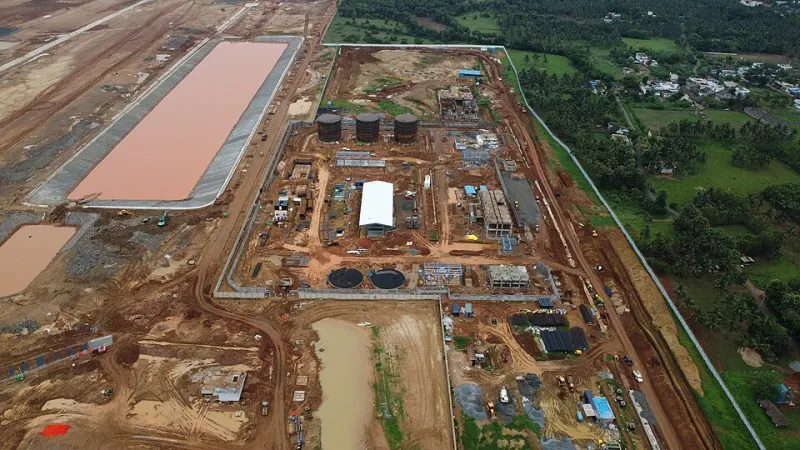
Photo: Saiphani02, CC BY-SA 4.0, via Wikimedia Commons
Somewhere beneath the tarmac of a mid-sized regional airport in the American Southwest, water that took thousands of years to accumulate is disappearing. Not slowly. Not quietly. It's being sucked out, contaminated, and paved over — all so airlines can add another gate, another runway, another cargo terminal to serve the quarterly earnings reports of companies you've never voted for.
This is the story nobody in the aviation industry wants you to read.
The Expansion Nobody Voted For
Over the past decade, regional airport expansion has become one of the most aggressive — and least scrutinized — infrastructure trends in the United States. The Federal Aviation Administration's Airport Improvement Program has funneled billions of dollars into runway extensions, terminal buildouts, and cargo facility construction at airports that most Americans barely think about. Places like Tucson International, Colorado Springs Airport, and Bozeman Yellowstone International are growing fast, gobbling up land and water resources in regions that can least afford to lose them.
The pitch is always the same: jobs, economic growth, regional connectivity. And sure, there's something to that. But what the press releases don't mention — what the environmental impact statements bury in appendices nobody reads — is what all that concrete and chemical runoff does to the water table sitting right underneath.
In water-stressed states like Arizona, New Mexico, and Nevada, aquifers aren't just convenient. They're existential. Communities that have no viable surface water alternative depend entirely on groundwater for drinking, farming, and basic survival. And regional airports are expanding directly into some of the most critical recharge zones on the continent.
PFAS: The Forever Chemical That Keeps on Giving
Let's talk about firefighting foam, because this is where airport expansion gets genuinely terrifying.
For decades, airports have used aqueous film-forming foam — AFFF — to suppress fuel fires during training exercises and emergency responses. AFFF is loaded with per- and polyfluoroalkyl substances, better known as PFAS, the so-called "forever chemicals" that don't break down in soil or water and accumulate in human bodies over time. PFAS exposure has been linked to kidney cancer, thyroid disease, immune system disruption, and developmental problems in children.
Here's the kicker: when airports expand, they don't just bring new runways. They bring new fire training facilities, new fuel storage infrastructure, and new opportunities for PFAS-laden runoff to seep into the ground. A 2023 report from the Environmental Working Group identified more than 400 military and civilian airports across the US with confirmed or likely PFAS contamination in surrounding groundwater. That number is almost certainly an undercount — testing is inconsistent, reporting is voluntary in many jurisdictions, and airport authorities have a documented history of minimizing contamination findings.
In communities near expanding regional airports in states like Florida, Michigan, and California, residents have already been told their well water is unsafe to drink. Some have been on bottled water for years. Meanwhile, the airports that poisoned their wells are still getting federal expansion grants.
The Regulatory Swiss Cheese
So why isn't someone stopping this? The short answer is that the regulatory framework governing airport development is a masterclass in jurisdictional confusion — and the aviation industry has spent decades making sure it stays that way.
The FAA oversees airport safety and development funding, but it has no direct mandate to protect groundwater. The EPA sets PFAS standards but has historically lacked enforcement teeth when it comes to airport-specific contamination. State environmental agencies are supposed to fill the gap, but in many water-stressed Western states, those agencies are chronically underfunded and politically captured by the same economic development interests pushing airport expansion in the first place.
Environmental impact assessments — the documents that are supposed to flag these problems before construction begins — are routinely prepared by consultants hired by the airports themselves. Conflicts of interest don't get more blatant than that. And public comment periods, the nominal mechanism for community input, are typically scheduled at inconvenient times, buried in bureaucratic language, and ignored when they produce inconvenient conclusions.
The result is a system where aviation authorities can prioritize runway extensions over aquifer protection with almost no meaningful accountability.
Who's Cashing In
Follow the money, and the picture gets even uglier.
Major construction firms like AECOM and Jacobs Engineering have pulled in hundreds of millions in airport expansion contracts over the past five years. Private equity-backed cargo operators — many of them logistics subsidiaries of Amazon, FedEx, and UPS — have lobbied aggressively for expanded regional airport capacity to support last-mile delivery networks. The e-commerce boom didn't just give us two-day shipping; it gave us a generation of airport expansion projects in communities that were never asked whether they wanted them.
Investors in airport-adjacent real estate and industrial development are also cashing in. As airports expand, surrounding land values spike, incentivizing further development that compounds groundwater stress. It's a feedback loop that benefits shareholders and devastates aquifers — and it's happening right now in communities from the Sonoran Desert to the Great Plains.
The Communities Left Holding the Bill
In Tucson, where the aquifer has been in documented decline for decades, airport expansion plans have proceeded with minimal public debate about water impacts. Local environmental advocates have raised alarms, but they're fighting a well-funded coalition of business interests and a federal funding pipeline that rewards expansion almost unconditionally.
In the Texas Hill Country, residents near a rapidly expanding regional airport have reported changes in well output that they attribute to construction activity disrupting the Edwards Aquifer — one of the most important freshwater sources in the state. State regulators have been slow to investigate. The airport keeps building.
In Colorado, communities downstream of expanding airports are bracing for the long-term groundwater consequences of PFAS contamination that has already shown up in preliminary testing. Their options are limited: sue, organize, or watch their water disappear.
These aren't isolated cases. They're a pattern — and the pattern is accelerating.
What Needs to Happen
This isn't an argument against airports or even against aviation expansion in principle. It's an argument that water has to be part of the conversation, and right now it isn't.
Here's what fighting back looks like:
Demand mandatory groundwater impact assessments before any federally funded airport expansion project breaks ground — assessments conducted by independent parties with no financial stake in the project's approval.
Push your congressional representatives to reform the Airport Improvement Program to include enforceable water protection standards as a condition of federal funding. Call their offices. Show up at town halls. Make them say the word "aquifer" out loud.
Support local organizing. Groups like Earthjustice, the Natural Resources Defense Council, and dozens of grassroots water advocacy organizations are already fighting these battles in communities across the country. They need visibility, volunteers, and funding.
Demand PFAS accountability. The EPA's new PFAS drinking water standards are a start, but they need teeth. Airports that contaminate groundwater should be required to fund cleanup and alternative water supplies for affected communities — no exceptions, no grandfather clauses.
The water beneath our feet doesn't care about quarterly earnings or cargo throughput metrics. It's a shared inheritance, built up over millennia, and we're burning through it to make it slightly more convenient to ship packages overnight.
That's not economic development. That's theft. And it's happening in slow motion, underground, where most of us will never see it — until the well runs dry.