Hot Meals, Cold Truth: The Hidden Cost of Feeding America's Elders
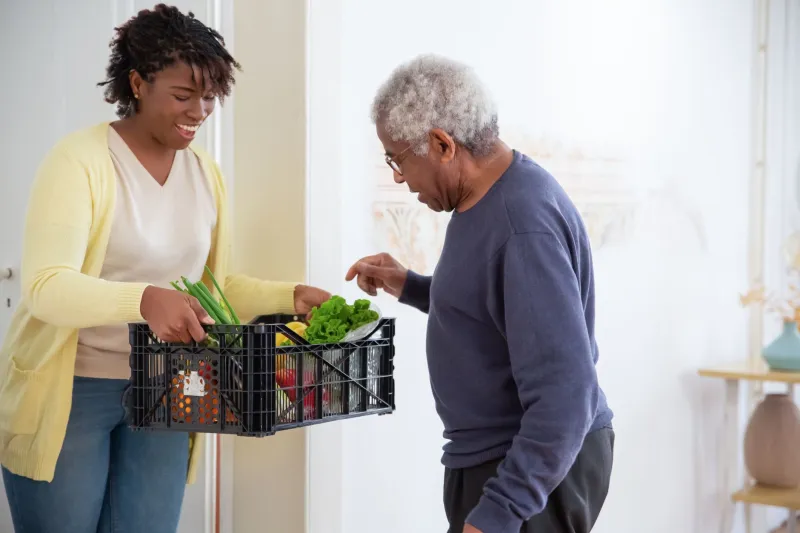
There's a version of this story that makes you feel good. A volunteer loads up a car with warm meals and drives them to homebound seniors across town. It's wholesome. It's American. It's the kind of thing that gets featured in local news segments around Thanksgiving.
And that version is real. Parts of it, anyway.
But the full picture of how America feeds its most vulnerable elders — the logistics, the labor, the food supply chain, the fuel — is a lot more complicated, and a lot less comfortable, than the brochure version. If we're serious about fighting for both people and planet, we can't keep looking away from the contradictions baked into even our most cherished social programs.
The Fleet Nobody Talks About
Meals on Wheels America and its network of local affiliates collectively deliver more than 220 million meals a year to seniors across all 50 states. That's an extraordinary feat of logistics. It's also, in many regions, an extraordinary feat of fossil fuel consumption.
The majority of those meals are delivered by vehicle — vans, cars, and trucks, many of them aging diesel or gasoline-powered. In rural areas, where the distances between homebound seniors can stretch for miles, route efficiency is nearly impossible to optimize. A driver might cover 80 miles to deliver a dozen meals.
Few local Meals on Wheels affiliates have the capital to transition to electric vehicles. The federal funding that supports the program — primarily through the Older Americans Act — doesn't include dedicated infrastructure for fleet electrification. And the contract logistics providers that many urban affiliates now rely on to scale their delivery capacity operate on the same model as every other gig-economy delivery company: maximize volume, minimize overhead, externalize costs.
Those externalized costs include carbon emissions that nobody is tracking consistently, in a program that nobody wants to criticize because it feeds old people. Which is exactly the kind of moral complexity we need to be willing to sit with.
The Drivers Holding It Together
Let's talk about the people actually making these deliveries.
In the volunteer-driven model that characterizes many smaller affiliates, drivers are unpaid community members giving their time. That model is beautiful and increasingly strained. Volunteer pools are aging out. Recruitment is harder. And in metro areas where demand has exploded — particularly post-pandemic, as more seniors age in place rather than entering facilities — the volunteer model simply can't keep up with need.
The gap gets filled by contract workers. Gig drivers hired through third-party logistics platforms, paid per delivery, with no benefits, no mileage reimbursement in many cases, and no sick days. These are often the same workers cycling through DoorDash and Instacart shifts — people living paycheck to paycheck, absorbing the wear on their personal vehicles, and carrying the emotional weight of being, for many isolated seniors, the only human contact of the day.
That's a profound responsibility to place on someone making $14 an hour with no job security.
The labor model that props up senior meal delivery in much of urban America is the same extractive gig economy model we've rightly criticized everywhere else. The fact that the end beneficiary is a vulnerable elder doesn't change the structural injustice of how the worker is treated. Both things matter. We don't have to choose.
Industrial Food in a Compassionate Wrapper
Then there's what's actually in the box.
Meals on Wheels programs are required to meet federal nutritional guidelines, and many do an admirable job within tight budget constraints. But the food supply chain feeding those meals is, in large part, the industrial agricultural system — with all its attendant emissions, water consumption, chemical inputs, and labor abuses.
Sodium-heavy processed proteins. Vegetables sourced from large-scale monoculture operations. Portion-controlled packaging generating significant plastic waste. These aren't indictments of the people running local programs; they're doing the best they can with the resources available. They're indictments of a funding model that treats senior nutrition as a line item to minimize rather than an investment to optimize.
A handful of innovative programs around the country are proving that a different approach is possible. In Denver, a program called Food For Thought partners with local farms to source ingredients and employs formerly incarcerated individuals as kitchen staff and drivers. In Detroit, community-based senior nutrition programs are integrating urban agriculture, reducing both food miles and isolation. In rural Vermont, a cooperative model pools resources across small towns to electrify delivery routes and source from regional producers.
These aren't utopian experiments. They're working programs, operating right now, demonstrating that dignity for seniors and sustainability for the planet are not competing values.
What Honoring Our Elders Actually Looks Like
There's a phrase we use a lot in progressive spaces: 'care economy.' We mean it to encompass all the labor — paid and unpaid — that sustains human life. Childcare. Elder care. Healthcare. The work, disproportionately done by women and people of color, that holds everything else together.
If we're serious about valuing the care economy, we have to be willing to fund it properly. And funding it properly means not just expanding access to programs like Meals on Wheels, but reimagining their infrastructure from the ground up.
That means federal investment in EV fleet transition for senior service nonprofits. It means reclassifying delivery workers as employees with benefits when they're doing consistent, essential public service work. It means procurement standards that prioritize regional food systems and reduced packaging. It means designing programs that treat the senior at the door and the driver behind the wheel and the farmer in the field as all equally deserving of dignity.
The Generation That Earned Better
The seniors receiving these meals came of age in a world their generation helped build — for better and for worse. Many of them are living with the consequences of industrial decisions made decades ago: the pollution in their lungs, the chemical exposures in their working years, the climate instability reshaping the seasons of their final decades.
The least we owe them is a meal delivered without adding to that damage. Brought by a driver who's paid fairly and treated with respect. Sourced from food systems that aren't poisoning the next generation's water.
That's not a radical ask. It's the bare minimum of what it means to actually honor the people we claim to cherish.
The warm meal at the door is a beautiful thing. Let's make sure everything behind it is worthy of the people receiving it.