Pixel-Washing the Planet: How Crypto Carbon Schemes Are Giving Big Oil a Digital Alibi

Somewhere in a gleaming office park, a petroleum executive is signing off on another quarterly drilling expansion. And somewhere on the internet, a blockchain startup is minting the digital tokens that will let him call his company carbon-neutral by Tuesday.
Welcome to the newest frontier in corporate greenwashing — and it might be the most sophisticated one yet.
What Even Is a Tokenized Carbon Offset?
Here's the basic pitch: a company somewhere in the world — say, a forestry operation in the Amazon or a wind project in rural India — claims it's preventing a certain amount of carbon dioxide from entering the atmosphere. That claimed reduction gets certified, converted into a carbon credit, and then tokenized on a blockchain. Now it's a tradeable digital asset, as easy to buy and sell as a share of stock.
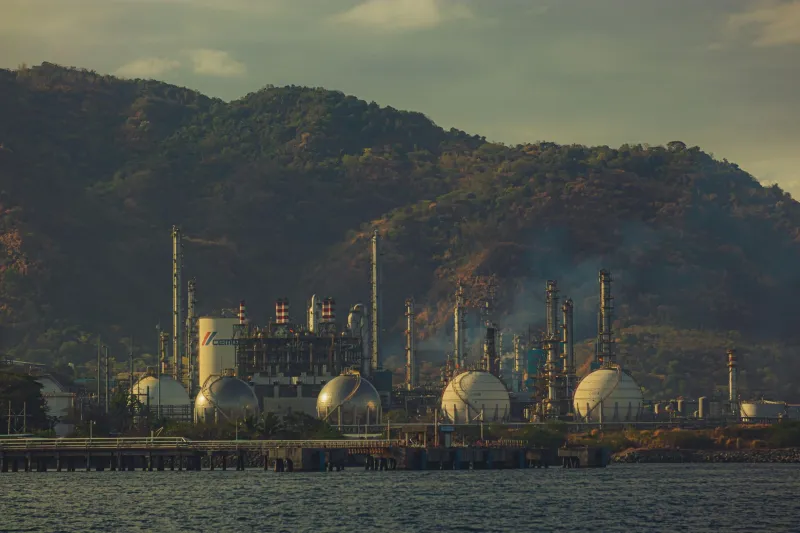
For the oil and gas industry, this is manna from heaven. Instead of actually reducing the emissions pouring out of their refineries and wellheads, they can just buy enough of these tokens to claim their operations are neutral. The drilling continues. The emissions continue. But on paper — or rather, on a distributed ledger — they're as clean as a mountain spring.
And increasingly, those tokens are finding their way into your investment portfolio whether you know it or not.
The ESG Backdoor
Environmental, Social, and Governance funds — marketed heavily to millennial investors who want their money to reflect their values — have become a primary distribution channel for these blockchain carbon products. Fund managers, under pressure to hit ESG benchmarks, have begun treating tokenized carbon credits as legitimate environmental assets.
The logic sounds reasonable on its face: if a fund holds carbon offsets, it's technically offsetting the emissions footprint of its other holdings. But investigative reporting from outlets including Bloomberg and the Guardian has repeatedly found that a staggering percentage of the underlying carbon projects — the forests, the wetlands, the cookstove programs — either don't deliver the promised reductions or wouldn't have released the carbon in the first place. You can't offset emissions by protecting a rainforest that was never actually under threat.
A 2023 analysis found that more than 90 percent of the rainforest offset credits certified by one of the world's leading carbon standards bodies were essentially phantom reductions — carbon that was never going to be emitted anyway. Those credits still got tokenized. They still got sold. And they still ended up in portfolios branded as environmentally responsible.
Follow the Founding Money
Dig into the venture capital backing behind many of the biggest blockchain carbon platforms, and familiar names start appearing. Energy majors, petrochemical conglomerates, and the private equity firms that orbit them have quietly seeded a significant portion of the tokenized offset space. They're not just buying the credits — they're building the exchanges that sell them.
This isn't an accident. If you control the infrastructure of carbon accounting, you get enormous leverage over what counts as an offset, how credits are priced, and which projects get certified. It's a little like letting fast food companies write the nutrition labeling rules.
Some of these platforms have also lobbied aggressively — and successfully — against tighter federal oversight of voluntary carbon markets. The Commodity Futures Trading Commission has jurisdiction over some carbon derivatives, but the voluntary market, where most tokenized credits live, remains a regulatory gray zone. There's no federal agency with clear authority to audit the environmental claims behind a carbon token before it gets minted and sold.
Retail Investors Are Holding the Bag
Maybe the most infuriating part of this story is who ends up exposed when the whole thing unravels.
Big institutional players — the hedge funds, the pension managers, the energy companies themselves — have legal teams that scrutinize every asset before it hits their books. They know what they're buying. Retail investors using climate-forward robo-advisors and ESG-screened 401(k) options largely do not. They see a fund with a leaf in the logo and a high sustainability rating and assume someone credible has done the vetting.
Sometimes that's true. Often it isn't. And when carbon credit markets correct — as they have been doing, with prices for voluntary credits collapsing in some sectors by more than 70 percent since 2022 — it's ordinary investors who absorb the losses while the oil companies that used the credits to burnish their reputations walk away having already gotten what they needed: a few more years of social license to keep extracting.
The Distraction Is the Point
Carbon offsets, digital or otherwise, were never supposed to be a permanent solution. The original idea was to use them as a short-term bridge while the hard work of actually decarbonizing industry took place. Instead, they've become a substitute for that hard work — a way to delay the structural changes that would genuinely reduce emissions at the source.
Every dollar that flows into a tokenized carbon credit scheme is a dollar that isn't going into renewable infrastructure, grid modernization, or the political organizing needed to force regulatory change. Every headline about a major oil company achieving carbon neutrality through offsets is a headline that isn't about holding that company accountable for its actual emissions.
The blockchain wrapper makes all of this feel more legitimate, more modern, more rigorous. Immutable ledgers! Smart contracts! Transparent verification! But the ledger only records what it's told to record. If the underlying project is bogus, the blockchain just preserves the fraud in perpetuity.
What Needs to Happen
This isn't a problem that market forces will solve on their own — the incentives are too badly misaligned. Here's what actual accountability would look like:
Mandatory federal oversight of voluntary carbon markets. The SEC and CFTC need clear, shared jurisdiction over carbon credit products marketed to investors, with enforceable standards for environmental claims.
Independent, publicly funded verification. Certification of carbon projects cannot be left to private bodies funded by the companies buying the credits. That's a conflict of interest so obvious it's almost embarrassing to have to say out loud.
Disclosure requirements for ESG funds. If a fund is using carbon offsets to hit its sustainability metrics, investors deserve to know exactly which offsets, from which projects, verified by whom.
An end to oil and gas companies claiming neutrality through offsets alone. Net zero has to mean actual emissions reduction, not accounting maneuvers. Regulators should prohibit emissions-intensive companies from marketing themselves as carbon-neutral based purely on offset purchases.
Don't Let Them Pixel-Wash Their Way Out
The fossil fuel industry has been playing this game for decades — finding new ways to appear to address climate change while protecting its core business model. Blockchain carbon markets are just the latest version of that playbook, and they're remarkably effective because they're genuinely difficult to understand.
That complexity is a feature, not a bug. The harder it is to trace a digital token back to a real forest, a real emissions reduction, a real environmental outcome, the easier it is to sell the illusion of progress.
Don't buy it. Demand transparency from your fund managers. Push your representatives to close the regulatory gaps. And remember: a token on a ledger isn't a tree in the ground, and a green logo on an investment app isn't a planet being saved.