Sweat Data, Big Oil Profits: The Fitness Industry's Secret Side Hustle Is Fueling the Climate Crisis
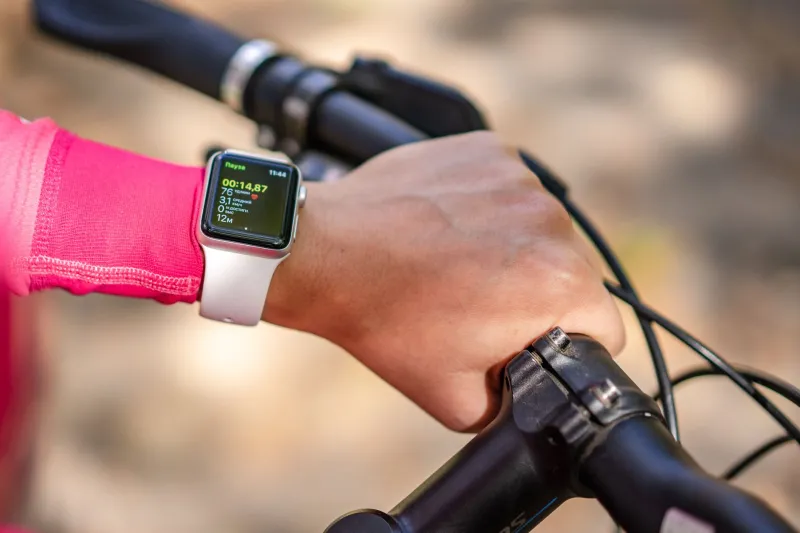
You lace up your sneakers. You strap on your Fitbit or Apple Watch. You fire up the Peloton app or check in at your local Planet Fitness. You're trying to get healthy — maybe even live longer on a planet that's getting hotter by the year. What you probably don't know is that while you're grinding through that spin class, a quiet transaction is happening in the background, one that has nothing to do with your VO2 max and everything to do with keeping fossil fuels flowing.
Your biometric data — your location, your income signals, your daily routines, your health status — is being harvested, bundled, and sold. And some of the biggest buyers in that market are the same companies responsible for cooking the planet.
The Data Pipeline Nobody Told You About
Let's start with what fitness apps actually collect. It's not just step counts. Companies like Strava, MyFitnessPal, Garmin Connect, and the apps tied to major gym chains are pulling in GPS coordinates, sleep patterns, heart rate data, workout frequency, device type, location history, and in many cases, payment information. Some platforms have explicit language buried in their privacy policies — the kind written to be unread — that permits them to share "de-identified" or "aggregated" data with third-party partners.
Here's the problem with "de-identified": it's largely a fiction. Researchers at MIT and other institutions have shown repeatedly that so-called anonymized datasets can be re-identified with startling accuracy using just a handful of data points. Your 6 a.m. run route from your front door to the park and back? That's not anonymous. That's a map to your house.
Data brokers — companies like Acxiom, Oracle Data Cloud, and LexisNexis Risk Solutions — act as the middlemen in this ecosystem. They buy data from fitness platforms, layer it with financial records, consumer behavior profiles, and demographic information, then resell those enriched packages to corporate clients across dozens of industries. Oil and gas is very much on that client list.
Why Big Oil Wants to Know You Hit the Gym
This is where it gets specific — and infuriating.
Fossil fuel companies and their lobbying arms are sophisticated political operations. They don't just run TV ads. They run precision influence campaigns targeting the people most likely to shift public opinion, donate to candidates, or pressure lawmakers. To do that effectively, they need to know who those people are.
Fitness data, it turns out, is a remarkably accurate proxy for wealth and civic engagement. People who own Pelotons, pay for premium gym memberships, or use high-end wearables like Whoop or Oura Ring skew toward higher incomes, higher education levels, and higher rates of political participation. They're homeowners. They vote in midterms. They write checks to campaigns and show up at town halls.
In other words, they're exactly the constituency that oil companies need to neutralize — or recruit — in the fight over climate policy.
Documents obtained by environmental watchdog groups and investigative reporters over the past several years have shown that the American Petroleum Institute and individual fossil fuel majors have contracted with data analytics firms that explicitly use consumer lifestyle data — including fitness and wellness signals — to build what the industry calls "persuasion models." These models identify which Americans are most likely to oppose pipeline projects, support carbon pricing, or back politicians who favor clean energy — and they help oil companies get to those people first.
The Gym Chains Aren't Innocent Either
It's tempting to point fingers only at the apps, but brick-and-mortar gym chains are deeply embedded in this system too. Major franchises have loyalty programs and check-in apps that generate location data every time you walk through the door. That data has commercial value, and the fitness industry — which pulled in over $35 billion in the US last year — has every financial incentive to monetize it.
When you sign up for a gym membership, you're typically agreeing to a privacy policy that grants the company broad rights to share your information with "affiliated partners" and "service providers." Those terms are elastic enough to drive a tanker truck through.
Some companies have faced scrutiny. Strava made headlines in 2018 when its global heatmap accidentally revealed the locations of secret military bases — a reminder of how granular and sensitive this data really is. But regulatory consequences were minimal, and the data-selling business model kept humming.
The Regulatory Gap Is Enormous — and Intentional
The United States has no comprehensive federal data privacy law. Unlike the European Union, which implemented GDPR in 2018 to give citizens meaningful control over their personal information, American consumers are largely at the mercy of corporate privacy policies and a patchwork of state-level rules that vary wildly.
California's Consumer Privacy Act is the strongest protection most Americans can point to, and it still has significant loopholes. The fitness and wellness industry has lobbied aggressively — sometimes alongside tech giants — to keep federal privacy legislation weak or stalled entirely. The result is a system designed to extract maximum value from your personal data while leaving you with essentially no recourse.
And while Congress dithers, the data keeps flowing. Your morning run. Your resting heart rate. Your gym check-in on a Tuesday night. All of it, moving through a shadow economy that ends up, in part, in the hands of the industry most responsible for the climate emergency.
What You Can Do Right Now
This isn't a situation where individual action alone fixes the problem — the scale demands systemic change. But there are concrete steps worth taking while we push for that change.
Audit your app permissions. Go into your phone's settings and review exactly what data each fitness app is collecting and sharing. Revoke location access when the app isn't in use. Opt out of data sharing wherever that option exists — it's usually buried, but it's there.
Read the privacy policy before you sign up. Yes, really. Or use a tool like Terms of Service; Didn't Read (tosdr.org) to get a plain-language summary of what you're agreeing to.
Demand better from your gym. Ask your gym chain directly what data they collect, who they sell it to, and how you can opt out. Make it uncomfortable for them to stay silent.
Support federal privacy legislation. Contact your representatives and tell them you want a strong national data privacy law — one that actually limits what corporations can do with your biometric and location data, not one drafted by the tech lobby.
Follow the money. Look up whether your gym chain or favorite fitness app has political action committees or lobbying operations. Who are they funding? The answers might surprise you.
Your Body Shouldn't Be a Revenue Stream for Climate Destruction
There's something deeply perverse about a system where your effort to stay healthy ends up subsidizing the industries making the planet uninhabitable. Every bead of sweat you track, every mile you log — it shouldn't be weaponized against the very future you're trying to live long enough to see.
The fitness industry has convinced us that self-improvement is personal. But when your personal data becomes raw material for fossil fuel influence campaigns, it stops being personal. It becomes political. And it demands a political response.
We need privacy laws with real teeth. We need transparency about who is buying our data and why. And we need to hold every company in this chain — the apps, the gyms, the data brokers, and the oil companies — accountable for the role they play in this hidden pipeline.
Your workout belongs to you. It's time to take it back.