Toxic Neighbors, Captive Kids: The Shameful Truth About Where America Builds Its Schools
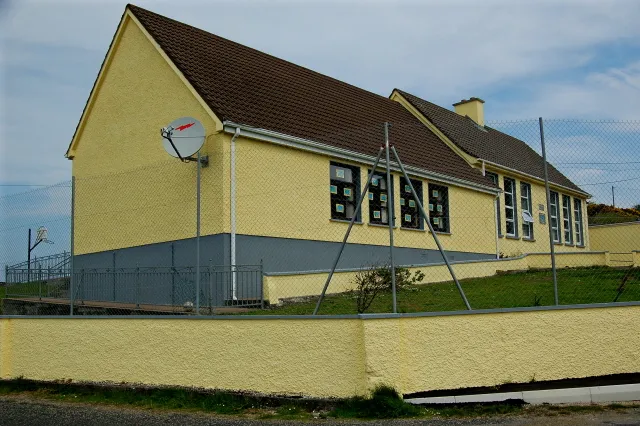
Photo: Joseph Mischyshyn, CC BY-SA 2.0, via Wikimedia Commons
Picture a kindergartner in Richmond, California, learning her ABCs while a Chevron refinery pumps particulate matter into the air outside her classroom window. Or a middle schooler in Detroit trying to concentrate on algebra while the smell of a nearby waste transfer station seeps through the ventilation system. Or a high schooler in Houston who has been diagnosed with asthma — along with a third of her classmates — because her school sits a quarter-mile from a petrochemical plant.
These aren't edge cases. They're a pattern. A deliberate, documented, decades-long pattern of placing schools in communities of color and low-income neighborhoods directly adjacent to the most polluting industries in America. And it is long past time we called it what it is: environmental racism baked into the foundation of our education system.
The Data Doesn't Lie — Even When the System Does
A 2021 report from the U.S. Government Accountability Office found that schools with the highest proportions of students of color and students from low-income families were significantly more likely to be located near hazardous waste facilities, active industrial sites, and land flagged by the EPA for contamination. The numbers are stark: schools in the lowest-income quartile are nearly twice as likely to sit within a mile of a Superfund site compared to schools in wealthier zip codes.
Research published in the journal Environmental Health Perspectives reinforces this. Schools serving predominantly Black and Latino student populations are disproportionately clustered in what researchers call "pollution burden hotspots" — areas where multiple industrial sources overlap, compounding exposure risks. It's not one bad neighbor. It's an entire ecosystem of industrial harm surrounding children who have no say in the matter and no easy way out.
The consequences aren't abstract. Children exposed to air pollution near schools show measurably lower test scores, higher rates of chronic absenteeism, and significantly elevated rates of asthma and other respiratory conditions. Lead contamination in soil — common near older industrial sites — causes irreversible neurological damage. These aren't just health statistics. They're stolen futures.
This Didn't Happen by Accident
Here's the part the school board meetings and the zoning commission hearings don't like to talk about: this is a structural problem, not a coincidence.
For most of the 20th century, industrial zoning laws in American cities were explicitly designed — and later implicitly maintained — to concentrate polluting facilities in neighborhoods where residents had the least political power to fight back. Redlining and racially restrictive housing covenants forced Black families into specific neighborhoods. Then, almost without exception, those same neighborhoods were designated as acceptable dumping grounds for industry. Waste facilities, highways, power plants, factories — they followed the people who had been stripped of the tools to say no.
Schools followed the people too. Public schools are built where the children are. And when those children have been systematically corralled into the most environmentally compromised parts of a city, their schools inherit the same toxic geography.
In cities like Chicago, New Orleans, and Los Angeles, community mapping projects have exposed what residents already knew in their bones: the redlined neighborhoods of the 1940s and the pollution hotspots of today are nearly identical overlays. The maps don't just rhyme — they match.
Parents Are Sounding the Alarm — and Getting Ignored
Talk to parents in these communities and you'll hear the same story over and over. They raise concerns. They show up to meetings. They bring the data. And they get met with a wall of bureaucratic indifference, legal complexity, and outright dismissal.
In Corpus Christi, Texas, parents at a predominantly Latino elementary school spent years documenting elevated illness rates among students before a state investigation confirmed soil contamination from a nearby industrial site. The investigation took four years. The cleanup still isn't complete. The kids are still there.
In Newark, New Jersey, advocates fought for over a decade to relocate a school built on a former industrial brownfield. They won — eventually. But "eventually" means an entire generation of kids breathed contaminated air while adults debated liability and funding formulas.
The system is not designed to move fast for these families. And that slowness is itself a form of harm.
The Federal Framework Is Failing
Title VI of the Civil Rights Act technically prohibits federally funded programs — including public schools — from operating in ways that produce discriminatory outcomes. Environmental justice executive orders dating back to 1994 require federal agencies to consider the disproportionate environmental burdens on communities of color. On paper, the tools exist.
In practice? Enforcement is nearly nonexistent. The EPA's Office of Environmental Justice has been chronically underfunded and politically undermined. Civil rights complaints under Title VI take years to process and rarely result in meaningful action. The Biden administration made some progress in reinvesting in environmental justice infrastructure, but the political winds are shifting, and the communities bearing the heaviest burdens can't afford to wait for the next election cycle to determine whether their kids deserve clean air.
What Fighting Back Actually Looks Like
This is not a problem without solutions. It's a problem without sufficient pressure. Here's how to apply some:
Demand an Environmental Equity Audit. Every school district in the country should be required to conduct and publicly release an environmental risk assessment for every school building — mapping proximity to industrial sites, air quality data, soil contamination history, and health outcome disparities among students. No more flying blind. Parents deserve this information as a baseline.
Push Your State Legislature. Several states, including California and New Jersey, have passed laws requiring environmental reviews before new schools are sited near industrial zones. Your state may not have one. Find out. Then find your state rep and make some noise.
Use the EPA's EJScreen Tool. This free, publicly available mapping tool lets anyone look up the environmental burden index for any address in the country. Pull up your child's school. Pull up schools across your district. Compare. Then bring that comparison to a school board meeting.
Connect with Local Environmental Justice Organizations. Groups like WE ACT for Environmental Justice, the Little Village Environmental Justice Organization in Chicago, and Earthjustice have been fighting these battles in courtrooms and city halls for years. They need bodies, voices, and resources.
Document and Organize. Track illness rates in your school. Talk to other parents. Build a paper trail. Bureaucracies respond to organized, documented pressure in ways they never respond to individual complaints.
The Planet Includes These Kids
At Free The Planet, we talk a lot about the future — about preserving the Earth for the generations coming up behind us. But that future has faces. It has a seven-year-old in Houston with an inhaler in her backpack. It has a ten-year-old in East Chicago who can't stay awake in class because his developing brain is being damaged by lead in the soil under his school's playground.
Fighting for the planet means fighting for these kids. It means refusing to accept a version of environmental progress that leaves the most vulnerable communities holding the toxic bag while wealthier zip codes get clean air, green spaces, and schools built on land that was never poisoned to begin with.
Environmental justice isn't a subplot of the climate movement. It's the whole point. And until the schools in Richmond and Newark and Corpus Christi are as safe as the schools in Scottsdale and Naperville and Bethesda, we haven't gotten there yet.
We've got work to do.