Wrapped in Lies: The Food Giants Drowning Our Oceans in Plastic While Pointing the Finger at You
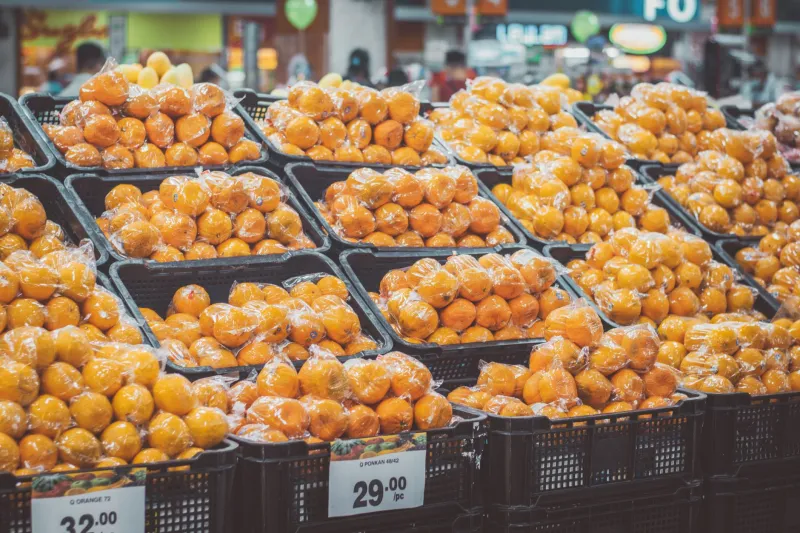
Walk down any grocery aisle in America and you're staring at the crime scene. Chip bags. Yogurt cups. Snack wrappers. Shrink-wrapped produce. Multilayer sauce pouches that no recycling facility on earth can actually process. It's everywhere — and it was designed to be.
But here's what the brands behind all that packaging don't want you thinking about while you're tossing a cereal box into your cart: they've spent decades engineering a system so deliberately fragmented, so intentionally obscure, that tracing who's actually responsible for the plastic choking our oceans is nearly impossible. That's not an accident. That's the point.
The Disappearing Act Hidden in Your Pantry
When researchers and journalists try to pin down exactly how much single-use plastic a company like Nestlé, PepsiCo, or Kraft Heinz actually produces, they hit a wall almost immediately. And that wall was built on purpose.
Major food corporations don't manufacture most of their own packaging. They contract it out — to subsidiaries, to third-party packaging firms, to overseas suppliers buried three or four layers deep in a supply chain designed for maximum deniability. When a brand's plastic ends up on a beach in North Carolina or floating in the Gulf of Mexico, the parent company can shrug and say, technically, they didn't make it.
Break Down Plastic, a coalition tracking corporate plastic footprints, has documented how this shell game works in practice. A conglomerate might own dozens of food brands — each with its own packaging contracts, each reporting (or not reporting) independently — making it nearly impossible to compile an honest aggregate number. Some companies voluntarily disclose partial data. Almost none disclose all of it. And the voluntary nature of that disclosure is itself part of the scam.
The EPA doesn't require comprehensive plastic footprint reporting from food manufacturers. There's no federal standard that compels a company to count every wrapper, every pouch, every single-serve container it puts into circulation each year. So most of them simply don't.
The Recycling Myth They Sold You
You've probably heard the stat by now: less than 9% of plastic ever produced has actually been recycled. Nine percent. The rest has been landfilled, incinerated, or released into the environment — including into waterways that feed directly into the ocean.
So why does every piece of plastic food packaging still carry that little recycling triangle? Because the food industry — working hand-in-glove with the plastics industry — spent the late 1980s and 1990s running a coordinated campaign to convince Americans that recycling would solve the problem. Internal industry documents, later obtained through litigation and public records requests, showed that executives knew recycling wasn't economically viable for most plastics even as they were funding the very public messaging campaigns promoting it.
They didn't invest in real recycling infrastructure. They invested in the idea of recycling — because the idea was cheaper, and it worked. It shifted the moral burden onto consumers. Suddenly, plastic pollution wasn't a production problem. It was a disposal problem. Your disposal problem.
Decades later, that framing still dominates public discourse. Corporations spend millions reinforcing it. "Don't litter." "Recycle responsibly." "Be part of the solution." The solution they never mention? Making less plastic in the first place.
Front Groups, Lobbying Dollars, and Killed Legislation
When genuine plastic regulation starts gaining momentum — bottle deposit expansions, extended producer responsibility laws, outright bans on certain single-use items — a predictable thing happens. Industry-funded groups materialize to fight it.
The American Chemistry Council, which represents major plastics manufacturers, has spent tens of millions of dollars lobbying against state-level plastic regulations across the country. The Consumer Brands Association, whose members include virtually every major food corporation in America, has consistently opposed legislation that would hold producers financially accountable for the end-of-life cost of their packaging.
In states like California and New York, where extended producer responsibility bills have advanced furthest, the lobbying opposition has been fierce and well-funded. The pitch to legislators is always the same: regulation will raise food prices, hurt working families, and kill jobs. What they don't mention is that the cost of plastic pollution — the cleanup, the public health impacts, the ecological damage — is already being paid. Just not by them. It's paid by municipal governments, by fishing communities, by indigenous coastal populations, and ultimately by taxpayers.
And when the lobbying isn't enough, some companies fund their own "environmental" nonprofits — organizations with names that sound like they're fighting plastic pollution, but whose actual mission is to promote voluntary corporate pledges over binding regulation. Pledges, it's worth noting, that carry zero legal enforcement mechanism and are almost never met on schedule.
What Eight Million Tons Looks Like
Eight million metric tons. That's the estimated amount of plastic entering the world's oceans every single year. Picture five grocery bags stuffed with plastic trash sitting on every foot of coastline on the planet. That's the scale we're talking about.
Marine scientists have documented plastic in the deepest ocean trenches on earth. They've found it in Arctic sea ice, in the bodies of whales and sea turtles, in the stomachs of seabirds feeding chicks hundreds of miles from any human settlement. Microplastics — the fragments that result when larger plastic items break down under UV exposure and wave action — have been found in human blood, in breast milk, in the placentas of newborns.
And a significant portion of that contamination traces back to food and beverage packaging. Brand audits conducted by Break Free From Plastic — in which volunteers collect and catalog plastic waste by brand — have repeatedly identified Coca-Cola, PepsiCo, Nestlé, and Unilever among the top global plastic polluters, year after year. The rankings barely change. The pledges keep coming. The plastic keeps flowing.
The Voluntary Pledge Treadmill
By now, most major food corporations have issued some version of a "sustainable packaging" commitment. A hundred percent recyclable packaging by 2025. Thirty percent recycled content by 2030. Net-zero plastic waste by some conveniently distant future date.
The problem is that these pledges are almost universally self-defined, self-reported, and self-enforced. Companies get to decide what counts as "recyclable" (often meaning technically recyclable somewhere, by someone, under ideal conditions — not actually recycled at scale). They get to decide what counts as "progress." And when deadlines pass without targets being met, there's no penalty. There's a press release announcing revised targets.
This isn't reform. It's reputation management.
What Real Accountability Looks Like
The path forward isn't complicated, even if it's politically hard. Extended producer responsibility laws — which require companies to fund the collection and processing of the packaging they put into the market — exist and function in countries across Europe and Canada. They work because they internalize the cost of waste into the business model, creating actual financial incentive to reduce packaging at the source.
Federal plastic disclosure requirements, modeled on financial reporting standards, would force corporations to publish accurate, audited data on how much plastic they produce annually. Bans on the most problematic formats — multilayer flexible packaging, single-serve sachets, certain foam materials — would push innovation faster than any voluntary pledge ever has.
None of this is radical. All of it is opposed by the same industry groups that have been running the same playbook for forty years.
Next time you're in the grocery store, look at the packaging. Then look at who made it, who owns that brand, and where their lobbying dollars go. The silence in that aisle is bought and paid for — and the oceans are paying the real price.